Illinois renewal has a posting deadline as well as a course-completion requirement. Producers need to check their SBS transcript, the ethics classification, and the current 2026 self-study instructions before filing.
Illinois producer renewal: the 10-business-day posting window matters
Illinois’s resident producer renewal instructions require 24 hours of course study, including 3 hours of ethics in a classroom or webinar, and require the producer to be CE-compliant at least 10 business days before the renewal date. The Department explains that CE compliance means the hours have been completed and are on the State Based Systems (SBS) record with the required lead time. A completion certificate by itself therefore does not establish that the renewal file is ready.
Work backward from the license date. Illinois says an education provider has 10 days from the Saturday after the exam to send results to the Department, and cites a rule advising producers to finish about one month before the license extension date so reporting can occur. The 10-business-day compliance requirement is a final buffer, not a target for taking the last class. Check SBS early enough to catch a missing roster, a wrong license number, or an ethics credit that was posted under the wrong category.
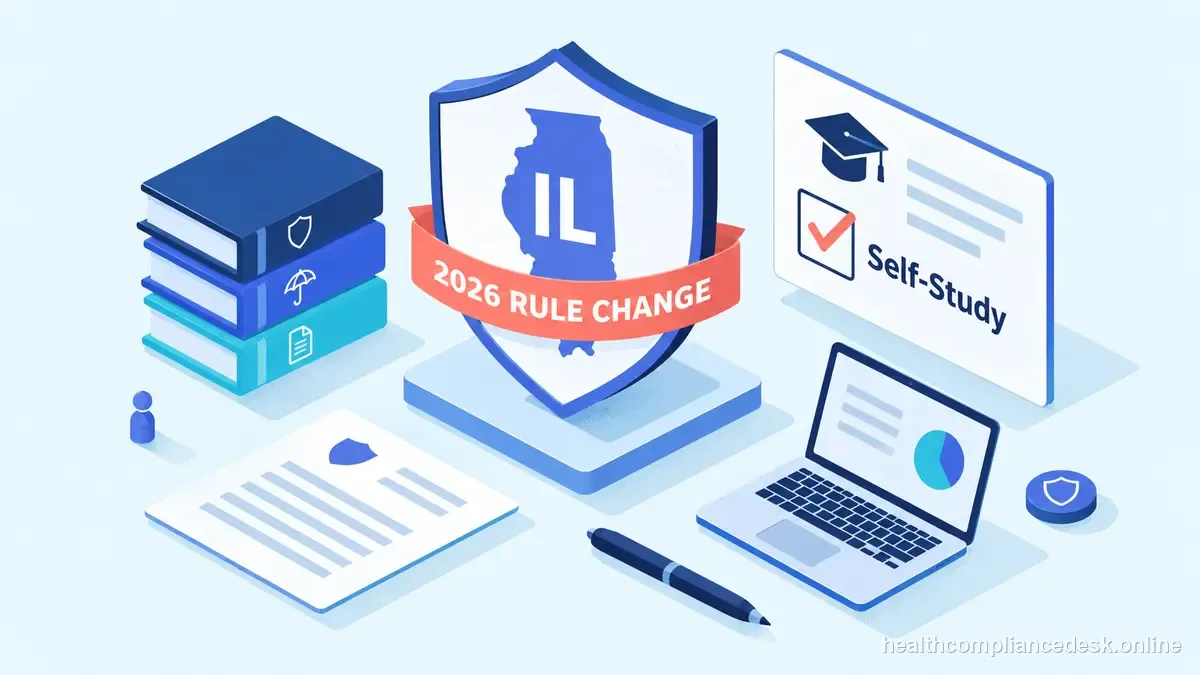
The 2026 Illinois DOI guidance also makes old self-study advice worth checking. It says self-study course materials must remain accessible, exams are open book, and proctoring is not required for those self-study exams. The same guidance describes course approval renewal limits and explains that courses renewed five or more times need resubmission as a new course if the provider wants to continue them in 2027. These provider-side rules can affect which course appears in the current catalog, so use an up-to-date Illinois approval record rather than a saved course list.
For a mismatch, capture the SBS transcript, course approval identifier, completion date, exam date, provider receipt, and license expiration. Ask the provider to verify when and under which license number it transmitted the result; then recheck SBS. If the posted record remains short, use the Department’s licensing channel for the specific issue and keep the correspondence. Do not solve a reporting defect by repeating a course before checking whether the credit can be corrected.
Illinois renewal sequence
- Confirm that the record is a resident producer renewal and note its actual date.
- Verify 24 hours and the 3-hour classroom/webinar ethics requirement.
- Confirm course approval and current self-study exam rules before enrollment.
- Finish early enough for provider reporting, then verify hours on SBS.
- Meet the 10-business-day compliance window and only then submit renewal.
- Save the accepted transcript, renewal receipt, and final active status.
Illinois reporting example: a course certificate is not the last step
Assume a resident producer completes an approved self-study course shortly before the renewal date. The producer should confirm the credit amount and ethics category, retain the course and exam receipt, and check the provider’s transmission to the Department. The Illinois DOI says providers have 10 days from the Saturday after an exam to send results; the credit must then be on SBS with the stated 10-business-day lead time before renewal. A producer who waits until the final week risks missing the compliance window even when the course was completed on time.
The Department’s 2026 update says self-study materials must remain available to the licensee, exams are open book, and proctoring is not required. Before purchasing from a saved vendor list, verify that the current course remains approved and is being offered under the updated rules. The 2026 guidance also flags a limit on course renewals as providers prepare courses for 2027; that rule affects course availability, not a producer’s CE hours.
If an SBS transcript is short, compare the reported course number and completion date with the receipt, ask the provider to validate the license number on its roster, and set a follow-up date. Do not confuse “provider submitted” with “Department record shows compliant.” The renewal team should capture an SBS transcript after the provider posts the correction, then confirm the ethics category and the 10-business-day clock before using the online NIPR renewal channel.
For a licensee holding multiple authorities, follow the Illinois producer record and identify any specialty product training separately. A common 24-hour plan is not proof that every special course obligation is satisfied. Keep a change log when Illinois rules or the provider course list change, so next cycle’s template points to the then-current DOI guidance.

Make the Illinois deadline visible to the producer and reviewer
The compliance date is earlier than the license expiration date: the producer needs the required credits on SBS with the Department’s lead time. Put that internal compliance date on the calendar in addition to the legal renewal date. Use an earlier course-completion target so provider reporting, a weekend exam date, or a roster correction does not consume the ten-business-day buffer.
For each course, record the approval number, credit type, exam or completion date, provider, transmission date, and SBS posting date. Keep ethics credit identifiable as classroom or webinar credit where required. A course may be generally approved and still be the wrong delivery type for the ethics requirement. If SBS does not show it, ask the provider to verify the license number and course record, then capture the corrected posting before filing.
When the license renews, save the accepted SBS record and final license status. If the agency has multiple producers, perform a second-person check on the ten-business-day cutoff and flag any license that is short. Update the checklist when the Illinois DOI’s 2026 course guidance or provider approvals change, so course planning does not rely on old proctoring instructions. This process makes a late reporting problem visible while there is still time to resolve it. When asking a provider to correct a roster, include the producer’s identifying license details, course approval number, and completion date, then check SBS again after the correction window. This creates a traceable record of the follow-up and avoids relying on an email promise alone.
- December 30, 2025Part 3119 changes took effect.
- 2026 guidanceCheck self-study exam access and current course approval.
- Ten business days before renewalThe article says producers should be CE compliant by this point.
- Before filingVerify 24 hours including 3 ethics hours and accepted transcript.
The article says 2026 self-study guidance changed exam access and proctoring treatment; use current Illinois DOI and SBS records.
- About one month before renewalFinish courses early to allow provider reporting.
- Provider reportingProvider has the stated period to send exam results.
- SBS reconciliationVerify posted total and ethics classification.
- At least 10 business days before renewalBe compliant in the Department’s record.
- RenewalSubmit and confirm final license status.
Complete before the final buffer so a provider-reporting delay can be fixed.